English pronunciation practice: exercises that actually work
 Yurii Rebryk · Updated August 28, 2026 · 10 min read
English pronunciation practice works when it combines three things: hearing the contrast between sounds, saying them out loud, and checking recordings of your own speech. Reading rules or listening passively changes almost nothing. The exercises below cover all three, from minimal pairs and stress drills to a 10-minute daily routine, and most need only your phone’s voice recorder and a dictionary with audio.
In this article
- What English pronunciation practice actually involves
- What pronunciation practice is not
- Minimal pair exercises: hear the contrast, then say it
- Problem sounds by native language
- Word stress exercises
- Practice sentences, paragraphs, and tongue twisters
- Shadowing: pronunciation practice in full sentences
- A 10-minute daily English pronunciation routine
- American English pronunciation practice
- Recording, feedback, and where AI fits
What English pronunciation practice actually involves
Pronunciation practice covers three layers:
- Individual sounds: can you say sheep differently from ship?
- Word stress: REcord the noun versus reCORD the verb.
- Sentence rhythm: which words carry the beat while the rest get compressed.
Most learners drill only the first layer and wonder why they still sound off.
Weight the layers by what listeners actually need. A slightly wrong vowel is usually easy to recover from; misplaced stress often is not, because English listeners use the stress pattern to identify the word in the first place.
If your practice so far has been repeating difficult words, start with the stress and rhythm sections below. Pronunciation is only one of the skills behind spoken fluency; the guide on how to improve English speaking shows where it fits.
What pronunciation practice is not
It is not accent elimination. The realistic goal is intelligibility: being understood on the first attempt without the listener working for it. Plenty of people with a clear accent are effortless to understand.
It is not passive listening either: pronunciation is a motor skill, and your mouth learns movements only by making them. A session with no speaking out loud is listening practice, whatever the app calls it.
Nor do drills replace conversation. They polish delivery, while English speaking practice builds the ability to produce sentences in the first place; budget time for both separately.
Rule of thumb: if a session involved no speaking out loud and no listening back to your own voice, it was not pronunciation practice.
Minimal pair exercises: hear the contrast, then say it
A minimal pair is two words that differ by exactly one sound: ship and sheep, full and fool. Drilling pairs works because you cannot reliably produce a contrast you cannot hear, and several English contrasts do not exist in other languages. The drill has four steps:
- Play dictionary audio for both words several times and notice the physical difference, not just the spelling.
- Test your ear: shuffle the recordings and check whether you can tell which word is which without seeing it.
- Say the pair aloud in alternation, exaggerating the contrast.
- Record yourself saying five pairs, listen back next to the dictionary audio, and mark the pairs where your two words sound identical. Those are your problem sounds for the week.
Ten pairs cover the contrasts learners miss most often; pick one per week and put both words into short sentences.
| Pair | Contrast | What to listen for |
|---|---|---|
| ship / sheep | /ɪ/ vs /iː/ | sheep is longer and tenser; ship is short and relaxed |
| full / fool | /ʊ/ vs /uː/ | fool stretches out, with tighter lip rounding |
| bed / bad | /e/ vs /æ/ | bad opens the jaw noticeably wider |
| cut / cat | /ʌ/ vs /æ/ | cut is central and short; cat is front and open |
| think / sink | /θ/ vs /s/ | for think, the tongue tip touches the teeth |
| light / right | /l/ vs /r/ | for light the tongue touches the ridge behind the teeth; for right it curls back without touching |
| berry / very | /b/ vs /v/ | berry starts with both lips; very with the top teeth on the lower lip |
| walk / work | /ɔː/ vs /ɜːr/ | work has the r-colored vowel; walk has no r sound at all |
| chair / share | /tʃ/ vs /ʃ/ | chair begins with a hard stop before the hiss; share starts soft |
| price / prize | final /s/ vs /z/ | the vowel before the voiced z in prize is noticeably longer |
How much English phonetics do you need?
Only the symbols for your problem sounds. Every dictionary entry lists a phonetic transcription, and being able to read /ɪ/ versus /iː/ tells you instantly which vowel a new word uses.
Memorizing all of the symbols is linguistics, not practice. Learn the five to eight that cover the contrasts you personally miss and stop there; the complete chart is published by the International Phonetic Association.
Problem sounds by native language
Which pairs to start with depends on your first language, because the contrasts your language lacks are the ones your ear has learned to ignore. Below are the classic trouble spots for five language backgrounds; treat your row as the default starting list and drop anything you can already hear reliably.
| Native language | Typical trouble spots | Classic mix-up |
|---|---|---|
| Spanish | /ɪ/ vs /iː/, /b/ vs /v/, an extra e before s + consonant | ship → sheep, berry → very, “estop” for stop |
| Portuguese | th sounds /θ/ and /ð/, extra vowel after final consonants, word-final l | think → “tink” or “fink”, book → “bookie”, feel → “few” |
| Japanese | /l/ vs /r/, /v/ vs /b/, vowels inserted into consonant clusters | light → right, very → berry, stress → “sutoresu” |
| Korean | /f/ vs /p/, /v/ vs /b/, /z/ vs /dʒ/, released final consonants | coffee → “copi”, zoo → “joo” |
| Mandarin | dropped final consonants, /θ/ vs /s/, /v/ vs /w/ | think → sink, very → “wery” |
- The th sounds are universal: /θ/ and /ð/ trip up speakers of almost every language, so they belong on nearly everyone’s list.
- These are hearing problems first: they become speaking problems downstream, which is why the ear test comes first in the minimal pair drill.
Word stress exercises
English uses stress to distinguish words: REcord with stress on the first syllable is a noun, reCORD with stress on the second is a verb. Misplaced stress damages intelligibility more than most wrong vowels, because listeners lean on the stress pattern to recognize the word at all.
| Word | As a noun | As a verb |
|---|---|---|
| record | REcord | reCORD |
| present | PREsent | preSENT |
| object | OBject | obJECT |
| permit | PERmit | perMIT |
| contract | CONtract | conTRACT |
- Exaggerate stress on your own vocabulary. Take ten words you actually use at work, check the stress in a dictionary, and say each one with the stressed syllable exaggerated: louder, longer, higher in pitch, with the other syllables deliberately flattened. English stress lives in that contrast, so overdoing it in practice lands about right in real speech.
- Drill stress shift across word families: PHOtograph, phoTOgraphy, photoGRAPHic. The root stays the same while the beat moves.
Practice sentences, paragraphs, and tongue twisters
Word-level wins have to survive at sentence speed, so every drill needs a sentence stage. After fixing a sound in isolation, write two or three sentences you would plausibly say this week, and record them. “Can we ship it this sprint?” does more for /ɪ/ than any word list, because it runs at your real vocabulary and pace.
For daily reading practice, a short paragraph beats a long article. Take 60 to 90 seconds of text, mark the words that should carry stress, read it aloud, and record.
Compare against a fluent reading if you have one, or against your own version from last week. Audible progress between recordings is the point; the text itself barely matters.
Tongue twisters are a warm-up, not a cure: they build articulation speed on sounds you can already produce and do nothing for a contrast you cannot hear yet. Used that way, they earn their two minutes:
- She sells seashells by the seashore: /s/ vs /ʃ/
- Red lorry, yellow lorry: /l/ vs /r/
- Thirty-three thirsty thieves: the th sounds
- A proper copper coffee pot: /p/, /k/, and /f/ under speed
Say each one slowly and cleanly three times before trying it fast. A twister mumbled at speed trains mumbling.
Shadowing: pronunciation practice in full sentences
Shadowing means repeating audio in near-real time, about a beat behind the speaker, imitating rhythm, stress, and intonation without pausing. It forces what word drills cannot: at natural speed you physically cannot give every word its careful dictionary form, so the linking and reductions of fluent English appear on their own.
The setup is simple:
- One clear speaker in the recording.
- A 30 to 60 second clip slightly below your level.
- A transcript of the clip.
Shadow the same clip all week, reading along early on and following by ear later. If you are not sure where your level sits, the free English level test gives a quick baseline. Treat shadowing as the sentence-level half of your routine; for one stubborn sound, minimal pairs do the fixing.
A 10-minute daily English pronunciation routine
Ten minutes a day outperforms an hour on Sunday, because motor skills respond to frequency, not session length. The plan below touches every layer and fits before breakfast.
- Minutes 1–2: one minimal pair. Pick one contrast for the whole week. Listen to the dictionary audio, alternate the pair aloud ten times, then put each word into one short sentence.
- Minutes 3–5: word stress on your own vocabulary. Five words from your job or field. Check the stress, exaggerate the stressed syllable, flatten the rest. Recycle any word from yesterday that still felt wrong.
- Minutes 6–9: one clip or one paragraph. Shadow the same 30 to 60 second clip all week, or read your marked paragraph aloud. Follow the transcript early in the week, then drop it.
- Minute 10: record and compare. Record one sentence, play your version against the model, and write down the single biggest gap. That note is tomorrow’s focus.
Rotate the pair and the clip every week. The routine is deliberately small: the version you actually do every day beats the ambitious version you abandon in week two.
American English pronunciation practice
American English pronunciation practice adds two features on top of everything above: the flap T and r-coloring. Both are high-frequency, so they shape how American you sound more than any rare vowel does.
| Feature | What happens | Drill with |
|---|---|---|
| Flap T | Between vowels, t becomes a quick tap that sounds close to a soft d; it crosses word boundaries too, so get it comes out like geddit | water, better, city, meeting; short phrases at speed: put it on, a lot of |
| R-coloring | r is pronounced everywhere it is written, and the vowel and the r blend into a single r-colored sound | r at the start (red, around), after a vowel (car, more, hard, four), in -er endings (teacher, water) |
A quick self-check for the flap: if you hear a crisp t in the middle of water, you are still in careful-reading mode.
One more rule that saves months: pick one variety, American or British, and keep all your practice material in it. Mixing the two trains contradictory habits.
Recording, feedback, and where AI fits
The free setup is a dictionary with audio plus your phone’s voice recorder. To hear a word in real contexts rather than dictionary isolation, YouGlish plays it in thousands of short clips from real videos. The limit of the recorder method is diagnosis: you can hear that your version differs from the model, but not always what exactly is wrong, and the contrasts your ear filters out stay invisible.
AI feedback exists to close that gap. Speech recognition scores your recording per sound and names the specific miss, which turns guessing into a fixable list.
Two features are worth checking for in any tool: feedback at the level of individual sounds, and practice in full sentences rather than only repeat-after-me word lists. The roundup of speaking practice apps compares how current tools handle both; drill-first trainers are strongest on isolated sounds, conversation-first apps catch pronunciation inside real speech.
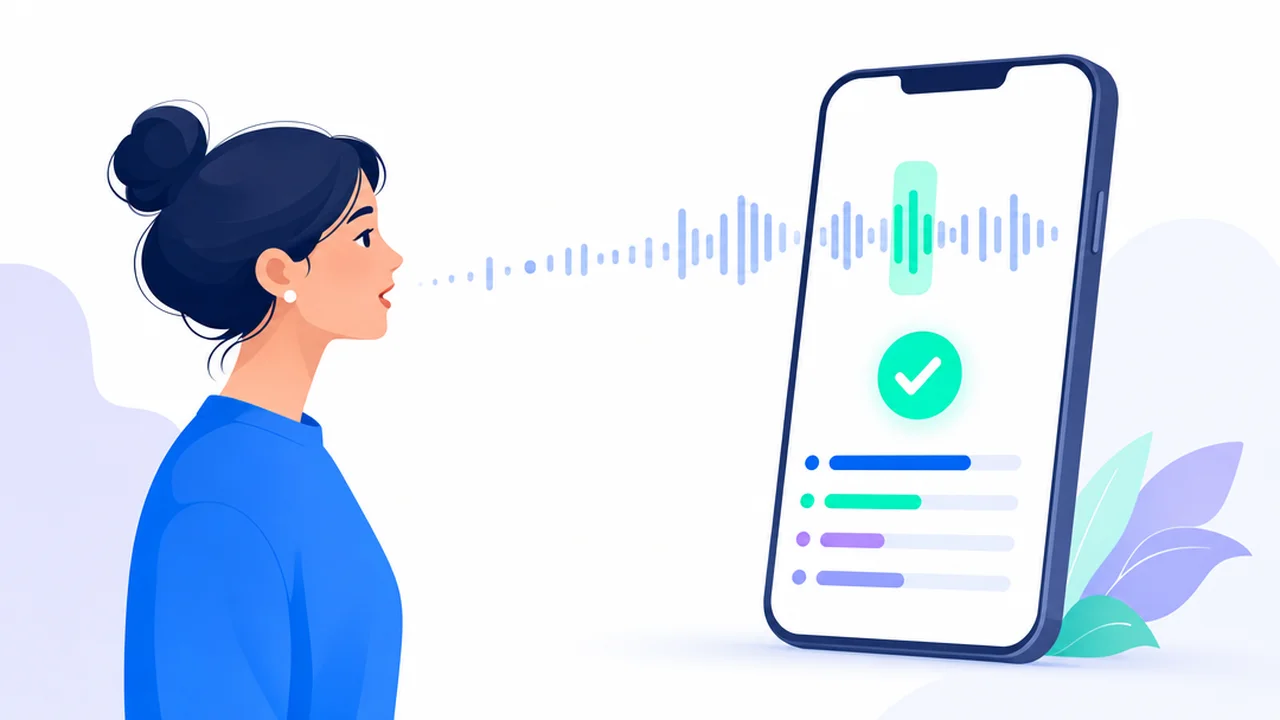
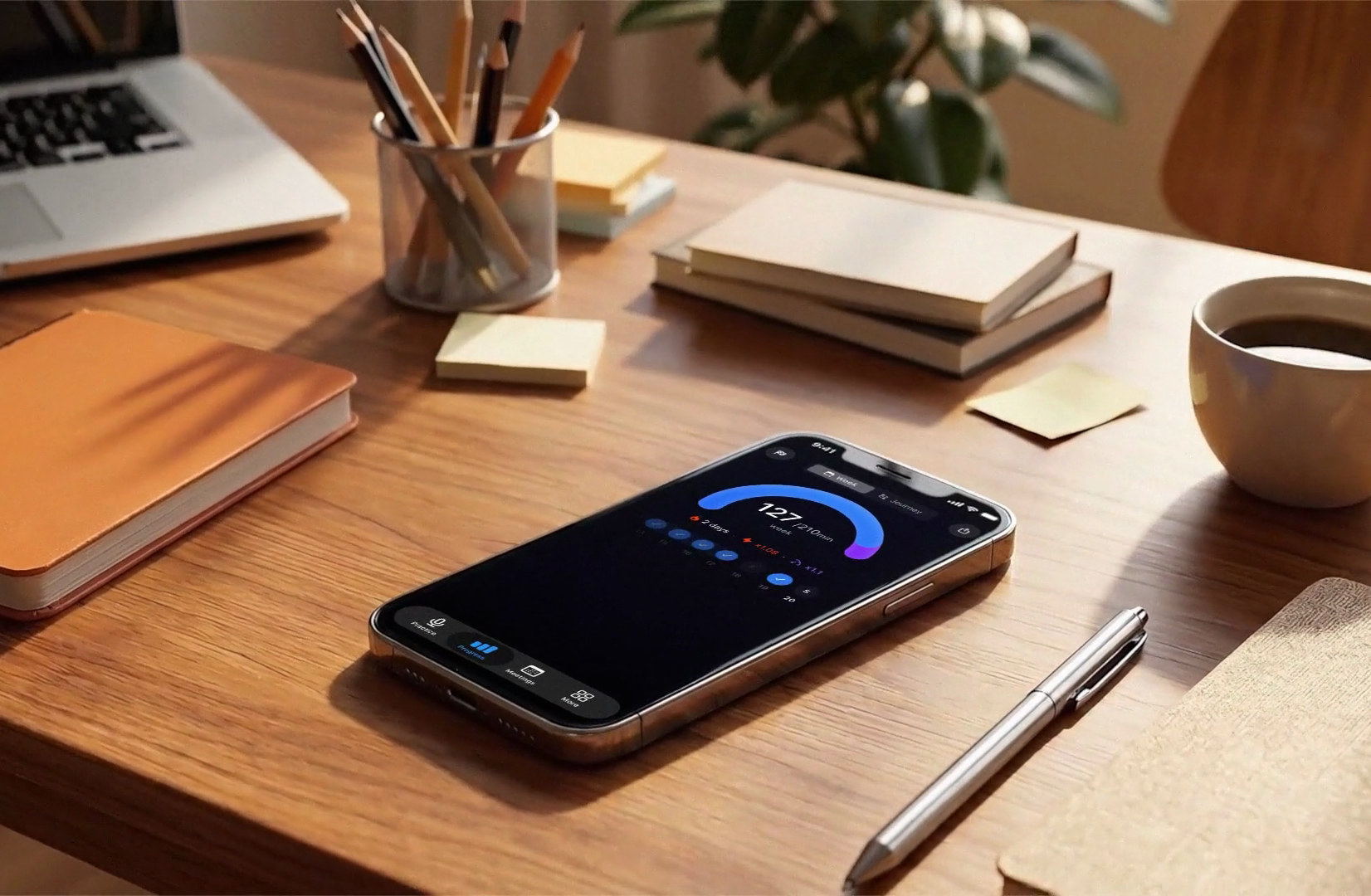
Fluently sits on the conversation side. You talk through free topics, work scenarios, or mock interviews out loud, and after each session it shows the sounds you consistently miss and a more natural phrasing of your own sentences.
The pronunciation feedback is built around American English, which fits if that is the variety you picked above. For an outside read before you commit to a routine, the free English speaking test gives a scored baseline in a few minutes.
Fix your sounds in real conversations
Fluently is an AI speaking coach for non-native professionals: you rehearse meetings, interviews, and work situations out loud, and after each session it points out the sounds you keep missing and shows how a native speaker would have phrased your sentence. Free to download on iOS and Android.


Frequently asked questions
How can I practice English pronunciation by myself?
With dictionary audio and your phone’s voice recorder. Drill minimal pairs against the dictionary model, record yourself, and compare the two recordings side by side; the gaps you can hear are the ones you can fix. For sounds you cannot yet perceive, self-comparison fails silently, so an app with per-sound feedback or a session with a tutor closes the loop. Everything else in the routine, stress drills, paragraph reading, shadowing, needs no equipment at all.
How long does it take to improve English pronunciation?
Individual sounds respond fastest: with daily minimal-pair work, a specific contrast typically starts to stick within a few weeks. Stress and rhythm are slower, since they run through everything you say, and count in months of regular practice rather than weeks. A native-identical accent is a multi-year project most learners do not need; intelligibility, being understood on the first attempt, improves long before that and is the milestone worth tracking.
Can I learn to speak English without an accent?
Losing an accent completely is rare in adulthood and, for work, study, or daily life, unnecessary. What adults reliably achieve is a lighter accent and full intelligibility: stress in the right place, problem contrasts fixed, rhythm close enough that nobody has to work to follow you. That is the goal the exercises here aim at. If a listener understands you on the first attempt, your accent has stopped being a problem, whatever is left of it.
Do I need an app to practice pronunciation?
No. A dictionary with audio and a voice recorder cover the mechanics of every exercise on this page, free. What an app adds is diagnosis and structure: feedback on the sounds you cannot yet hear yourself getting wrong, and a routine that keeps running on busy days. Whether that is worth a subscription depends on how well you self-monitor; try the free recorder method for two weeks and see where it stalls.
What should beginners focus on first?
Hearing before speaking. Run the ear half of the minimal pair drill on the contrasts listed for your native language, learn the phonetic symbols for those five to eight sounds, and copy dictionary audio for the hundred words you use most. Skip shadowing until you can follow slow, clear speech comfortably, and keep sessions to ten minutes. Free-form conversation practice pays off later, once you can already build basic sentences without rehearsing them.